When I have a small block cipher size, let’s say for example 4 bits the plain text statistics can still be analyzed, but having a very large block size, maybe as long as the plaintext, will make it nearly impossible to crypt analyze because every plaintext will give very different bits
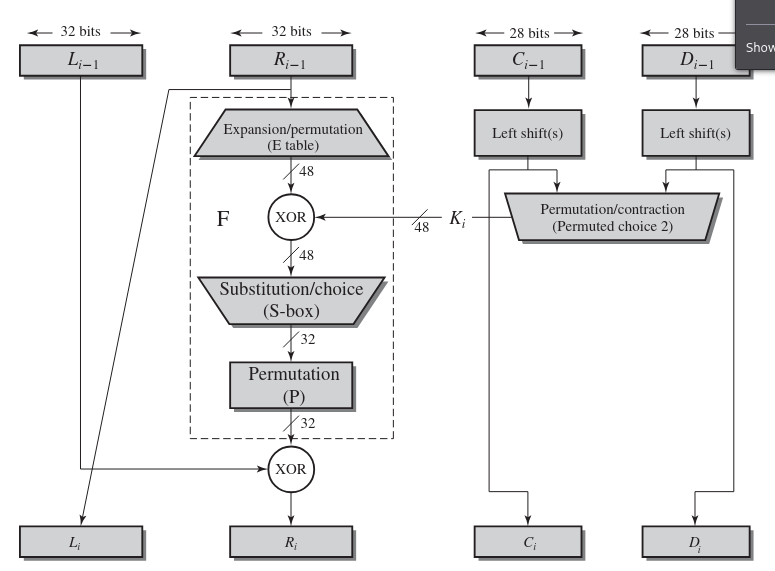
The substitution in the feistel cipher happens in the XOR operation
Avalanche Effect
A desirable property of any encryption algorithm is that a small change in either the plain-text or the key should produce a significant change in the cipher-text. In particular, a change in one bit of the plain-text or one bit of the key should produce a change in many bits of the cipher-text. This is referred to as the avalanche effect.
Diffusion
Each plain-text digit should affect many digits in the cipher-text, and if a bit is changed it causes many bits in the cipher to change. This makes statistical analysis very hard.
Confusion
Relationship between the cipher-text and value of the key the encryption key should be as complex as possible. Knowing one should make it really hard to guess the other.
The modulus depends on the floor of the number
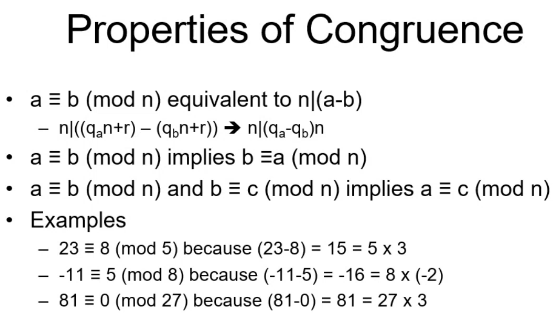
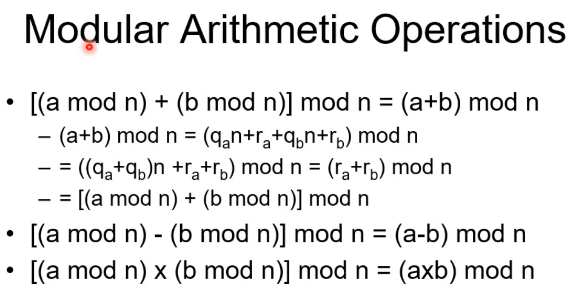
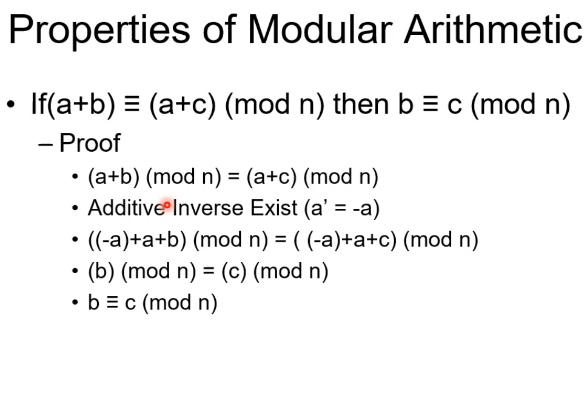
Modular Arithmetic properties are in slides

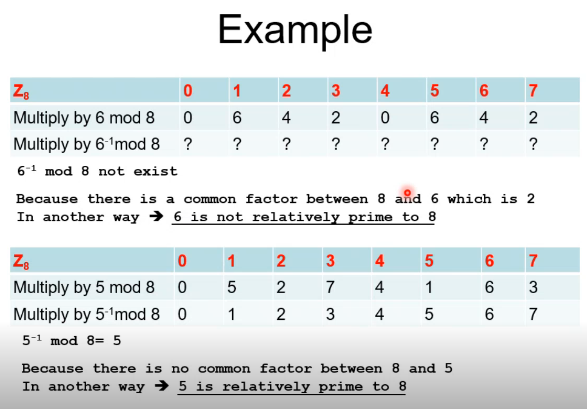 This is very important on why we chose not , if there is no a common factor between the number and the modulo we can get a multiplicative inverse.
We usually a prime number for the residual so we are sure that there is no common factor between this number and the modulo.
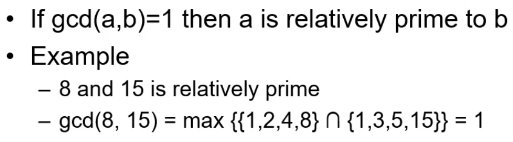
What is the meaning of “relatively prime” ?
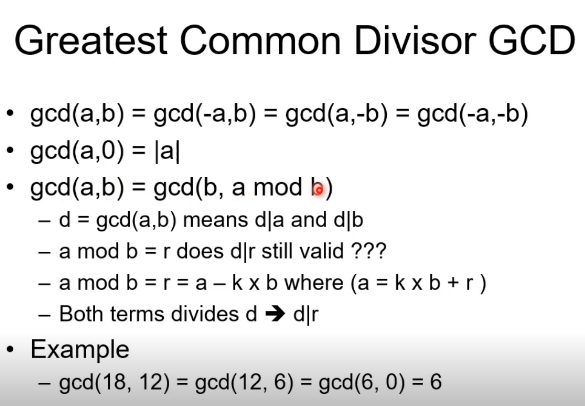 since a and b have d in it then r is divisible by d
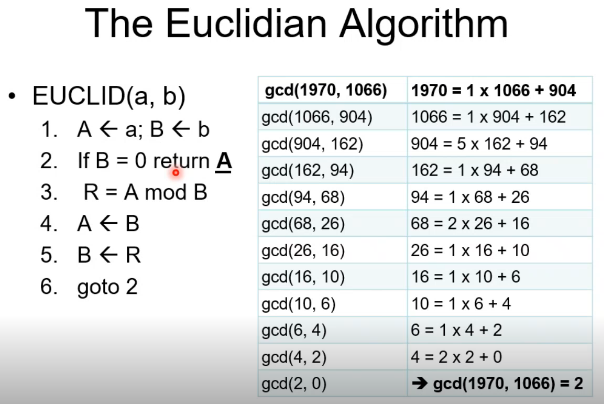
Sometimes I’d like to make n not prime and the residuals still be relatively prime to n. The reason for that is so that the number of bits used to represents the residuals when n is not prime can represent more numbers in the system.
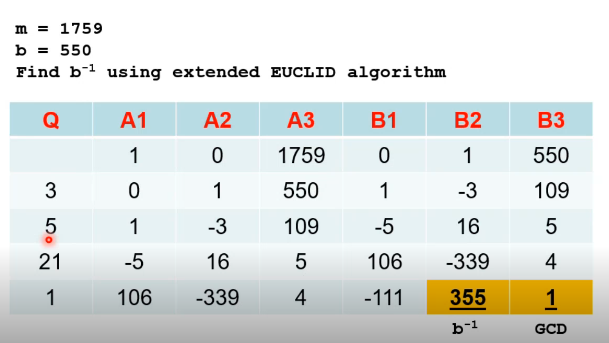
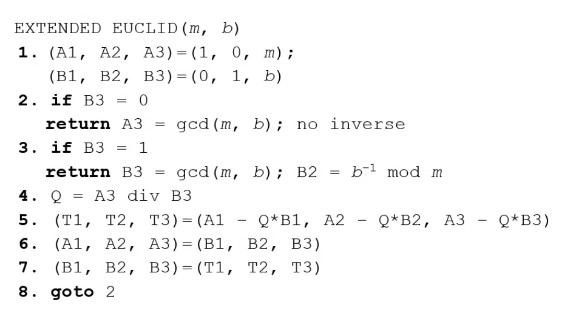 The extended euclidean algorithm is used to calculate the multiplicative inverse of a number in a field
Section
Solving the key permutation is as follows
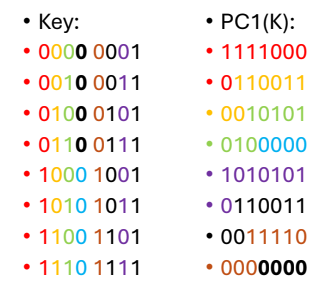
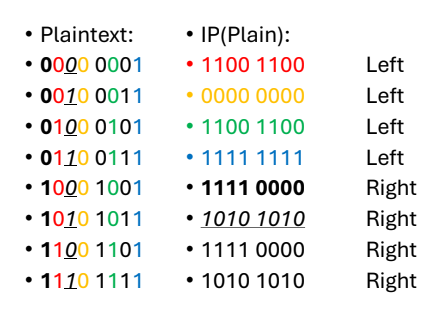
Initial permutation
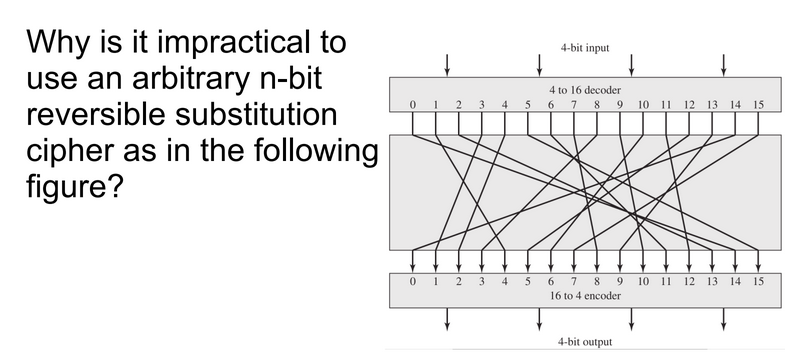
Because here the transformation itself is considered the key, and we will need n bits if the input is n bits and rows for this transformation to be complete.
Feistel vs non-Feistel
“in the classic Feistel structure, half of the data block is used to modify the other half of the data block and then the halves are swapped. AES instead processes the entire data block as a single matrix during each round using substitutions and permutation.”
This was said in the reference page: 153
Padding
in the beginning of lecture 7
Confidentiality, identity and authentication
Getting GCD without algorithms
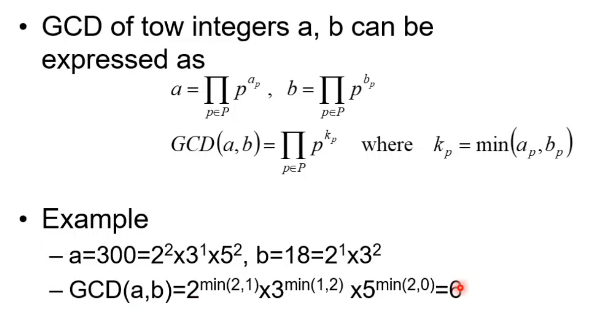
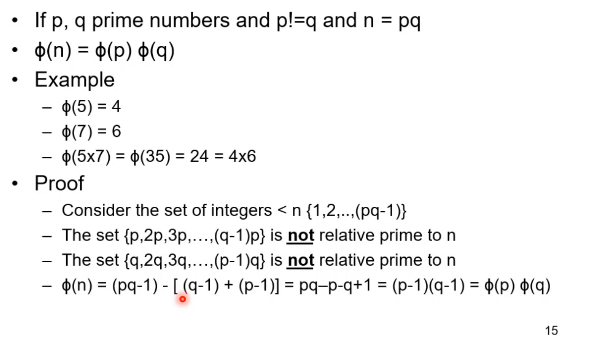
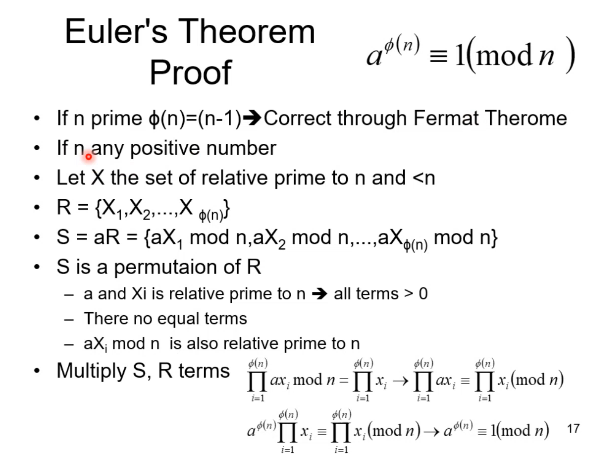
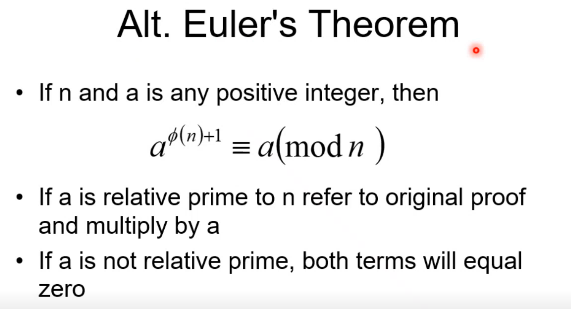
Euler totient proof
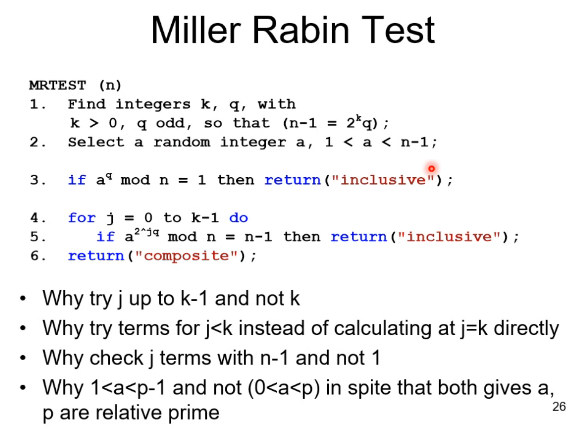
How to detect a number is prime
- It must be an odd number
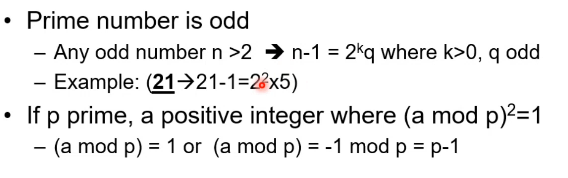
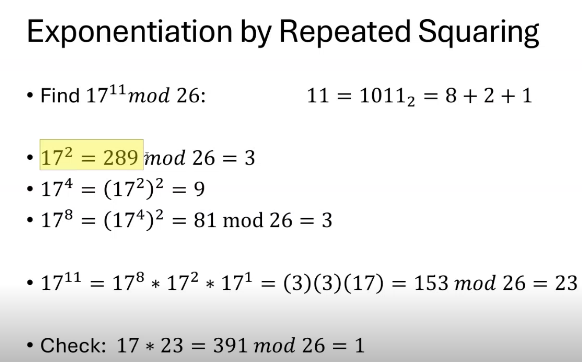
If we didn’t get 1 then it is certainly not prime, but if we got a 1 then maybe it is prime.